India’s Next Unicorns: 156 Startups to Watch in 2026
India’s Next Unicorns: 156 Startups to Watch in 2026
India’s next unicorns could already be on the radar
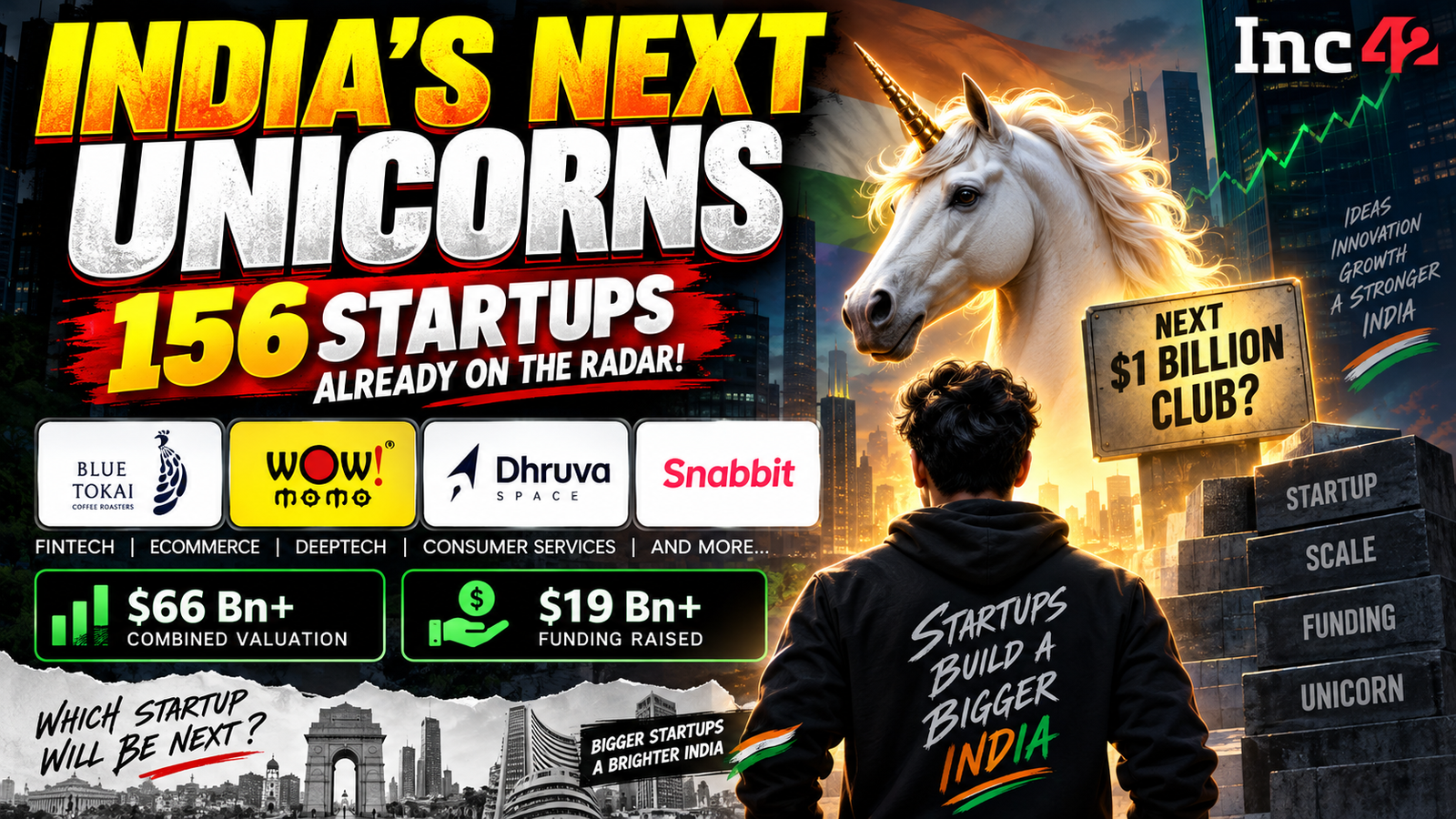
From consumer brands such as Blue Tokai Coffee, Wow! Momo and GIVA to technology-focused companies such as Dhruva Space, India’s next unicorns are emerging across multiple sectors.
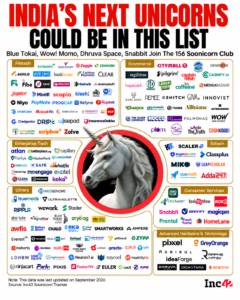
Inc42’s latest Soonicorn Tracker identifies 156 Indian startups valued between $200 Mn and under $1 Bn, creating a sizeable pipeline of companies that are approaching the billion-dollar valuation mark. Collectively, these startups have a valuation of more than $66 Bn and have raised over $19 Bn in funding so far. From consumer brands such as Blue Tokai Coffee, Wow! Momo and GIVA to technology-focused companies such as Dhruva Space, India’s next unicorns are emerging across multiple sectors. But what exactly makes a startup a soonicorn, and which industries are producing the next generation of high-value Indian startups?Let’s break it down.
Table of Contents
- What Is a Soonicorn?
- India’s Next Unicorns: The Numbers
- Which Sectors Are Producing Soonicorns?
- Blue Tokai, Wow! Momo and Other Consumer Brands
- Dhruva Space and India’s Deeptech Opportunity
- Snabbit and the Rise of Quick Home Services
- Bengaluru Leads India’s Soonicorn Ecosystem
- What Could Shape India’s Next Unicorns?
- Conclusion
What Is a Soonicorn?
A soonicorn is a startup that is approaching unicorn status.
A unicorn is generally defined as a privately held startup with a valuation of $1 billion or more.
For its September 2026 tracker, Inc42 categorises soonicorns as startups with valuations between $200 Mn and under $1 Bn.
This means the 156 companies in the tracker have already reached a significant valuation milestone, but they have not necessarily become unicorns.
Their future valuations can change depending on factors such as:
- Revenue growth
- Profitability
- Funding rounds
- Market conditions
- Business execution
- Investor sentiment
- Expansion opportunities
Therefore, the list should be viewed as a snapshot of India’s high-value startup pipeline rather than a guarantee that every company will become a unicorn.
India’s Next Unicorns: The Numbers
The latest Inc42 tracker provides an interesting picture of the Indian startup ecosystem.
| Metric | September 2026 |
|---|---|
| Soonicorns | 156 |
| Valuation Range | $200 Mn – <$1 Bn |
| Combined Valuation | $66 Bn+ |
| Funding Raised | $19 Bn+ |
| Indian Unicorns | 133 |
Source: Inc42 Indian Soonicorn Tracker, September 8, 2026.
India’s startup ecosystem has already seen 133 startups enter the unicorn club, while another 156 companies currently fall into Inc42’s soonicorn category.
That creates a large pipeline of startups operating below the $1 Bn threshold.
Which Sectors Are Producing Soonicorns?
One of the most interesting aspects of India’s next unicorns is the diversity of sectors represented.
The soonicorn ecosystem extends far beyond traditional fintech and ecommerce.
Major sectors include:
Fintech 💳
Payments, lending, financial technology and insurance-related businesses.
Ecommerce 🛒
Digital-first brands, marketplaces and specialised online commerce platforms.
Enterprise Tech 💻
Software, SaaS, cybersecurity, developer tools and business technology.
Edtech 🎓
Learning platforms, professional education and technology-enabled education services.
Deeptech 🚀
Space technology, robotics, advanced hardware and other technology-intensive businesses.
Consumer Services 🏠
Home services, lifestyle and convenience-focused businesses.
Agritech & Cleantech 🌱
Technology-driven solutions for agriculture, sustainability and energy.
Inc42 specifically highlights quick commerce, AI, deeptech and robotics as sectors that have come to the forefront, while noting that several companies in these areas require patient capital because of longer development cycles.
Blue Tokai, Wow! Momo and the Rise of Consumer Brands
When people think about startups, fintech and software companies often come to mind first.
But India’s next unicorns are increasingly coming from consumer businesses as well.
Companies such as Blue Tokai Coffee, Third Wave Coffee, Wow! Momo and GIVA are part of the broader consumer startup landscape highlighted by Inc42.
This reflects an important change in India’s consumption story.
Indian consumers are increasingly spending on:
- Premium food and beverages
- Fashion and lifestyle
- Personal care
- Convenience services
- Experience-driven brands
- Digital-first products
Consumer startups therefore have an opportunity to build large brands by combining strong distribution, technology and customer loyalty.
However, high valuation alone does not guarantee long-term success. For consumer companies, factors such as repeat purchases, margins, customer acquisition costs and brand strength remain important.
Dhruva Space and India’s Deeptech Opportunity
Another important name in India’s startup ecosystem is Dhruva Space.
Its presence highlights the increasing importance of deeptech and spacetech in India’s entrepreneurial landscape.
India’s startup ecosystem is expanding beyond traditional internet businesses into areas involving:
- Satellites
- Space infrastructure
- Robotics
- Artificial intelligence
- Advanced hardware
- Defence technology
- Semiconductor-related technologies
Inc42’s latest tracker identifies six deeptech soonicorns and four AI soonicorns, showing that technology-intensive businesses are becoming an increasingly visible part of the soonicorn pipeline.
These businesses can require more capital and longer development periods than conventional software startups, making access to patient capital particularly important.
Snabbit and the Rise of Quick Home Services
Another interesting category within India’s next unicorns is quick home services.
Snabbit is listed by Inc42 at an estimated valuation of around $350 Mn, while Pronto is listed at around $200 Mn.
These businesses are part of a larger shift toward convenience.
Consumers increasingly expect everyday services to be:
Fast + Convenient + Reliable + Easy to Book
This trend is creating opportunities for technology-enabled service platforms that can efficiently connect customers with service professionals.
The long-term opportunity, however, depends on whether these businesses can balance customer demand with supply-side efficiency and sustainable unit economics.
Bengaluru Leads India’s Soonicorn Ecosystem
Geography also plays an important role in India’s startup ecosystem.
According to Inc42, Bengaluru has 56 soonicorns, accounting for more than one-third of India’s total soonicorns.
It is followed by:
| Startup Hub | Soonicorns |
|---|---|
| Bengaluru | 56 |
| Delhi NCR | 38 |
| Mumbai | 34 |
| Hyderabad | 7 |
| Pune | 5 |
| Chennai | 4 |
Inc42 also identifies cities such as Coimbatore, Jaipur and Gandhinagar among locations housing soonicorns.
This suggests that India’s startup ecosystem is developing across multiple cities, although Bengaluru remains the largest soonicorn hub in the latest tracker.
What Could Shape India’s Next Unicorns?
The journey from a $200 Mn startup to a $1 Bn company is not automatic.
Several business factors can influence whether a startup continues to grow.
1. Revenue Growth
Fast-growing revenue can demonstrate that customers are willing to pay for the company’s products or services.
2. Unit Economics
A company needs to understand whether acquiring and serving customers can ultimately create sustainable economics.
3. Profitability
Profitability is becoming increasingly relevant as investors place greater emphasis on sustainable business models.
Inc42’s September 2026 FY26 Financial Tracker reported that 63 out of 92 tracked startups, or around 68.5%, reported profits in FY26.
4. Funding Availability
Capital remains important for startups operating in capital-intensive sectors such as deeptech, AI and robotics.
5. Market Opportunity
A large addressable market can give a startup more room to expand.
6. Competitive Advantage
Technology, brand, distribution, intellectual property or network effects can help a company differentiate itself.
7. Execution
Ultimately, a startup must convert its opportunity into sustainable business performance.
Funding Is Important — But It Is Not Everything
One of the biggest lessons from India’s startup ecosystem is that funding and valuation should not be viewed in isolation.
A startup can raise substantial capital and still face challenges around profitability, cash burn, competition or market expansion.
This is why the latest phase of India’s startup ecosystem is seeing more focus on financial discipline.
Inc42’s latest financial tracker reported that Indian startups generated ₹3.13 lakh crore in operating revenue in FY26, while 63 of the 92 companies tracked reported profits.
The broader trend suggests that the ecosystem is moving toward a model where growth and financial sustainability increasingly need to work together.
The Changing Face of India’s Startup Ecosystem
India’s startup story has also expanded beyond the traditional technology hubs and business models.
The current soonicorn pipeline includes businesses working across:
Fintech → Ecommerce → Consumer → AI → Deeptech → Enterprise Tech → Edtech → Cleantech → Agritech
This diversification is important because it means India’s entrepreneurial ecosystem is no longer dependent on one particular sector.
The latest Inc42 tracker also notes that India’s startup ecosystem has a combined valuation exceeding $700 Bn
India’s Next Unicorns: What Comes Next?
The 156 startups in Inc42’s Soonicorn Tracker are not 156 guaranteed future unicorns.
Instead, they represent companies currently valued between $200 Mn and under $1 Bn.
Some may cross the $1 Bn threshold in future.
Others may grow more slowly, raise capital at different valuations or remain below the unicorn threshold.
That makes the next few years particularly interesting for India’s startup ecosystem.
The combination of AI, deeptech, consumer brands, fintech, ecommerce and technology-enabled services is creating multiple pathways toward large-scale businesses.
Conclusion: The Unicorn Pipeline Is Getting Bigger
India’s next unicorns are already taking shape across multiple sectors.
Inc42’s September 2026 Soonicorn Tracker identifies 156 startups, with a combined valuation of more than $66 Bn and funding of more than $19 Bn.
From Blue Tokai and Wow! Momo in consumer businesses to Dhruva Space in deeptech and Snabbit in quick home services, the list reflects how diverse India’s startup ecosystem has become.
The next phase may depend less on simply raising large funding rounds and more on building strong businesses, sustainable unit economics, recurring revenue and scalable operations.
So the bigger question isn’t simply:
“Which startup will become India’s next unicorn?”
It is:
“Which startups can turn today’s valuation into tomorrow’s sustainable business?”